H2O to GO boasts a diverse team of marketing experts adeptly dubbed as our “marketing panthers.” As Ralph Waldo Emerson eloquently stated in the late 1800s, “Build a better mousetrap and the world will beat a path to your door.” While innovation serves as a cornerstone, it’s insufficient on its own. Informing the world about the superior mousetrap you’ve built is equally crucial. When H2O to GO engineered their water treatment systems, specifically tailored for the challenging water conditions of Las Vegas, spreading the word was essential. Soft Water Nevada and Soft Water by Melissa are a couple of our trusted partners. We extend our sincere gratitude and acknowledgment.
Frequently Asked Questions
Answers to questions about water softeners, reverse osmosis systems, water filters and hard water for Las Vegas, Henderson, North Las Vegas, Summerlin and Enterprise.
Flushing Resin Beads from Plumbing in Water Softener: How to Resolve the Issue
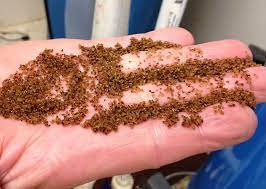
What’s Causing Resin Beads in Your Water?
Inside every water softener is a bed of resin beads that removes hardness minerals like calcium and magnesium. These beads are supposed to stay contained inside the tank.
However, when internal components fail—such as the distributor tube or internal screens—the resin can escape and travel throughout your home’s plumbing.
This is more common in mass-produced systems where internal parts wear out or break prematurely.
How to Flush Resin Beads from Your Plumbing
Sometimes, only a small amount of resin makes its way into your plumbing. If that case, you may only need to unclog the aerators. Aerators are the screens located in the tips of your faucents. But lets assume you had a complete resin loss. Here is what you do:
1. Bypass the Water Softener
Place your system on bypass. Most bypass valves are located between the pipes coming out of your wall and the valve or head on top of the tall cylinder. The instructions are usually written on the bypass but most involve turning a handle or handles to divert the flow of water before it goes into the valve on top of your system.
2. Drain Your Water Heater
Drain the tank completely, Consult the water heater’s manuel for this as all water heater are not the same. Make sure to turn off the gas or electricty and flush it out completly to remove trapped resin beads.
3. Remove Faucet Screens and Showerheads
Take off all aerators and screens to prevent clogging and allow debris to pass through.
4. Flush Your Plumbing System
Open all cold water faucets and let them run continuously.
5. Run All Appliances
Cycle water through:
- Washing machines
- Dishwashers
- Showers and tubs
- Any other water-using fixtures
6. Check for Clogs
If anything backs up or loses pressure:
- Shut it off
- Disconnect hoses
- Clear out any resin buildup
7. Continue Until Water Runs Clear
Flush until all visible debris is gone from every outlet.
Don’t Skip This Step: Fix the Root Problem
Flushing your plumbing is only part of the solution.
If your water softener is damaged, it will continue to release resin beads as soon as it’s turned back on.
Keep your system in bypass mode until it’s properly repaired or replaced.
How H2O To Go Solves the Problem
At H2O To Go, we go beyond temporary fixes. We identify exactly what failed and provide long-term solutions, including:
- Replacing broken internal components
- Rebuilding or re-bedding resin tanks
- Upgrading you to a more reliable, high-performance system
- Installing systems designed to prevent this issue altogether
We specialize in dependable, high-quality water filtration and softening systems—so you don’t have to deal with problems like this again.
Need Help? We’re Here
If you’re dealing with resin beads in your plumbing, don’t wait. The longer it goes unresolved, the more it can impact your fixtures and appliances.
Contact H2O To Go today for expert diagnosis and fast, reliable service.
- « Previous Page
- 1
- …
- 3
- 4
- 5