H2O to GO boasts a diverse team of marketing experts adeptly dubbed as our “marketing panthers.” As Ralph Waldo Emerson eloquently stated in the late 1800s, “Build a better mousetrap and the world will beat a path to your door.” While innovation serves as a cornerstone, it’s insufficient on its own. Informing the world about the superior mousetrap you’ve built is equally crucial. When H2O to GO engineered their water treatment systems, specifically tailored for the challenging water conditions of Las Vegas, spreading the word was essential. Soft Water Nevada and Soft Water by Melissa are a couple of our trusted partners. We extend our sincere gratitude and acknowledgment.
Flushing Resin Beads from Plumbing in Water Softener: How to Resolve the Issue
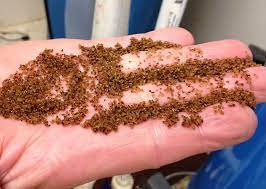
What’s Causing Resin Beads in Your Water?
Inside every water softener is a bed of resin beads that removes hardness minerals like calcium and magnesium. These beads are supposed to stay contained inside the tank.
However, when internal components fail—such as the distributor tube or internal screens—the resin can escape and travel throughout your home’s plumbing.
This is more common in mass-produced systems where internal parts wear out or break prematurely.
How to Flush Resin Beads from Your Plumbing
Sometimes, only a small amount of resin makes its way into your plumbing. If that case, you may only need to unclog the aerators. Aerators are the screens located in the tips of your faucents. But lets assume you had a complete resin loss. Here is what you do:
1. Bypass the Water Softener
Place your system on bypass. Most bypass valves are located between the pipes coming out of your wall and the valve or head on top of the tall cylinder. The instructions are usually written on the bypass but most involve turning a handle or handles to divert the flow of water before it goes into the valve on top of your system.
2. Drain Your Water Heater
Drain the tank completely, Consult the water heater’s manuel for this as all water heater are not the same. Make sure to turn off the gas or electricty and flush it out completly to remove trapped resin beads.
3. Remove Faucet Screens and Showerheads
Take off all aerators and screens to prevent clogging and allow debris to pass through.
4. Flush Your Plumbing System
Open all cold water faucets and let them run continuously.
5. Run All Appliances
Cycle water through:
- Washing machines
- Dishwashers
- Showers and tubs
- Any other water-using fixtures
6. Check for Clogs
If anything backs up or loses pressure:
- Shut it off
- Disconnect hoses
- Clear out any resin buildup
7. Continue Until Water Runs Clear
Flush until all visible debris is gone from every outlet.
Don’t Skip This Step: Fix the Root Problem
Flushing your plumbing is only part of the solution.
If your water softener is damaged, it will continue to release resin beads as soon as it’s turned back on.
Keep your system in bypass mode until it’s properly repaired or replaced.
How H2O To Go Solves the Problem
At H2O To Go, we go beyond temporary fixes. We identify exactly what failed and provide long-term solutions, including:
- Replacing broken internal components
- Rebuilding or re-bedding resin tanks
- Upgrading you to a more reliable, high-performance system
- Installing systems designed to prevent this issue altogether
We specialize in dependable, high-quality water filtration and softening systems—so you don’t have to deal with problems like this again.
Need Help? We’re Here
If you’re dealing with resin beads in your plumbing, don’t wait. The longer it goes unresolved, the more it can impact your fixtures and appliances.
Contact H2O To Go today for expert diagnosis and fast, reliable service.
What Is That Gunk in My Water Softener Salt Tank (and How Do I Clean It Out?)
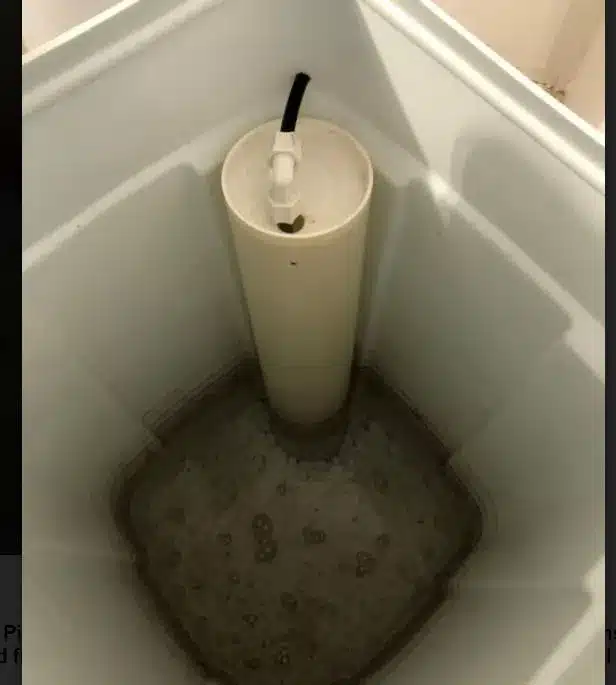
Why Is There Gunk in My Water Softener Salt Tank?
If you’ve opened your water softener salt tank and noticed brown sludge, hardened salt chunks, or sticky residue at the bottom, you’re not alone. This buildup is actually very common, especially in areas with very hard water like Las Vegas.
Over time, several things can collect in the salt tank and form what many homeowners call “gunk.”
1. Salt Mush (Sludge)
Salt pellets can slowly break down when exposed to humidity and water inside the tank. When this happens, the salt can turn into a thick slushy sludge known as salt mush.
This buildup can clog the softener’s brine intake, preventing the system from regenerating properly.
2. Insoluble Materials in Salt
Even high-quality water softener salt contains small amounts of insoluble material like:
- Dirt
- Sand
- Clay
- Mineral particles
These materials don’t dissolve and eventually settle at the bottom of the brine tank, forming a layer of residue.
3. Iron and Mineral Buildup
In homes with iron in the water supply, rust-colored sludge can appear in the tank.
The minerals removed during the softening process can also contribute to sediment accumulation over time.
4. Salt Bridges Breaking Apart
A salt bridge is a hard crust that forms above the water level in the tank. When these break apart, chunks fall into the water and can create additional sludge.
Signs Your Water Softener Tank Needs Cleaning
Your water softener may still be running, but the salt tank buildup can cause it to work less efficiently.
Watch for these warning signs:
- Your water suddenly feels hard again
- The salt level never seems to go down
- Large clumps of salt form in the tank
- You see dark sludge at the bottom
- The system regenerates but doesn’t improve water quality
If you notice any of these symptoms, it may be time to clean the tank.
How to Clean a Water Softener Salt Tank
Cleaning your water softener salt tank is a simple maintenance task that usually only needs to be done every 1–2 years.
Step 1: Turn Off or Bypass the Softener
Put your system into bypass mode or unplug it before starting.
Step 2: Remove the Salt
Use a scoop, cup, or small container to remove most of the salt from the tank.
If the salt is still clean and dry, you can often reuse it.
Step 3: Break Up Hardened Salt
If there are solid chunks or crusts, gently break them apart using:
- A plastic tool
- A wooden broom handle
Avoid using sharp metal tools that could damage the tank.
Step 4: Remove the Sludge
Scoop out the mush and debris at the bottom.
Some homeowners also use a wet/dry shop vacuum to remove leftover sediment.
Step 5: Rinse the Tank
Add a few gallons of warm water and swirl it around to rinse out remaining residue. Remove the dirty water.
You can also wipe the inside with mild soap and water, but avoid strong chemicals.
Step 6: Add Fresh Salt
Refill the tank with fresh salt pellets and restart the system. Running a manual regeneration cycle can help flush everything properly.
How to Prevent Salt Tank Buildup
A few simple habits can keep your water softener running efficiently:
✔ Use high-quality evaporated salt pellets
✔ Keep the tank half to three-quarters full
✔ Check the tank every few months
✔ Break up salt bridges if they form
✔ Clean the tank every 12–24 months
Regular maintenance helps extend the life of your water softener and prevents expensive repairs.
Why Water Softener Maintenance Matters in Las Vegas
Las Vegas has extremely hard water, often measuring 250–300+ ppm of hardness. This means water softeners here work harder than in many other parts of the country.
Because of this, regular maintenance is especially important to keep your system operating efficiently.
A properly maintained softener helps:
- Protect plumbing from scale
- Improve soap and detergent performance
- Extend appliance life
- Improve shower and skin comfort
Need Help With Your Water Softener?
If your softener is clogged with sludge, not regenerating properly, or producing hard water again, it may be time for a professional inspection.
At H2O To Go of Las Vegas, we’ve helped local homeowners improve their water for over 25 years with expert water testing, softener service, and advanced filtration systems.
Whether you need maintenance, cleaning, or a new system, our team is happy to help.
📞 Contact H2O To Go today to schedule a water test or softener service.
What Is in Lake Mead Water
What’s in Lake Mead Water: Exploring the Composition and Risks
Lake Mead, located on the border between Nevada and Arizona, is one of the largest man-made reservoirs in the United States. Created by the Hoover Dam in the 1930s, it serves as a crucial water source for millions of people in the southwestern U.S. and supports agriculture, industry, and municipal needs in both Nevada and California. But with climate change, severe droughts, and increasing demands on its resources, Lake Mead has faced water level declines in recent years, raising important questions about the quality and safety of the water in this vital reservoir.
The Composition of Lake Mead Water
Lake Mead is primarily fed by the Colorado River, which originates in the Rocky Mountains and travels across seven states, eventually reaching the reservoir. The water in Lake Mead contains a variety of substances, both natural and human-made, that come from the surrounding environment, including minerals, organic matter, and chemicals.
1. Minerals and Salts
The water in Lake Mead is not pure but rather contains dissolved minerals, including calcium, magnesium, and sodium. These are naturally occurring substances that are carried into the lake by runoff from surrounding rivers, streams, and tributaries. High concentrations of minerals in water are not necessarily harmful, but they can contribute to the water’s “hardness,” which can impact its taste and cause scaling in pipes and appliances.
2. Sediments and Organic Matter
Sediments, which consist of fine particles of soil, clay, and organic material, are often suspended in water and can accumulate in the lake over time. These materials come from erosion of the surrounding land, especially during periods of rainfall or runoff. Organic matter, including decaying plant material, can also make its way into the reservoir, contributing to the presence of nutrients that encourage the growth of algae.
3. Chemical Contaminants
Lake Mead water contains various chemicals, some of which come from agricultural runoff, wastewater discharge, and industrial activities. Common contaminants include nitrates, phosphates, and pesticides. While water treatment processes generally remove most harmful chemicals, some residual pollutants can remain, especially during periods of low water levels when contaminants become more concentrated.
4. Heavy Metals
Due to the history of mining and industrial activities in the surrounding areas, Lake Mead can sometimes contain traces of heavy metals like lead, mercury, and arsenic. These contaminants pose health risks, particularly when they accumulate over time and enter the water supply. Water quality testing and monitoring are essential to ensuring that concentrations of these metals remain within safe limits.
The Impact of Drought and Water Levels
As Lake Mead’s water levels continue to drop due to ongoing drought conditions and increased water demand, the composition of its water can be affected in several ways. Lower water levels concentrate pollutants and increase the risk of harmful algal blooms, which can produce toxins that are harmful to both humans and wildlife. The decrease in water volume also results in less dilution of contaminants, making the water quality less predictable.
In recent years, the U.S. Bureau of Reclamation has been working on managing the lake’s water to balance the needs of agriculture, municipalities, and wildlife. However, as water levels continue to decline, it’s expected that these management efforts will become more complicated, and the risk of water contamination will increase.
Risks to Human Health and Safety
For most people who rely on Lake Mead water, strict water quality standards ensure that it is treated to meet safety guidelines. However, the changing conditions of the reservoir raise some important health concerns:
- Algal Blooms and Toxins When water temperatures rise and nutrient levels increase, harmful algal blooms (HABs) can develop. These blooms produce toxins that can cause skin rashes, gastrointestinal issues, and even liver damage if ingested. Visitors to Lake Mead, as well as people consuming its water, should be aware of potential HABs, especially during warmer months.
- Chemical Contaminants Though water treatment plants are equipped to remove many of the common pollutants in Lake Mead, persistent chemical contaminants like pesticides, fertilizers, and industrial runoff can still present long-term health risks, especially if concentrations are higher than expected.
- Heavy Metals While levels of heavy metals like mercury and arsenic are generally low in Lake Mead, the prolonged presence of these substances in the water supply, especially in higher concentrations, can lead to long-term health effects, including kidney damage, cancer, and neurological problems.
Water Treatment and Safety Measures
Fortunately, the water supplied to homes and businesses from Lake Mead undergoes extensive treatment before it is distributed. Water treatment facilities remove harmful bacteria, viruses, and contaminants to ensure the water is safe for consumption. This includes:
- Filtration: Removal of large particles and sediment.
- Disinfection: Chlorine or other disinfectants are added to kill bacteria and pathogens.
- Chemical Removal: Treatment processes such as activated carbon filtration can remove chemicals, heavy metals, and organic contaminants.
Public water agencies closely monitor the water quality from Lake Mead and conduct regular tests to ensure that any changes in water composition are detected quickly. In the event of hazardous conditions, public advisories and water restrictions are issued.
Conclusion
While Lake Mead remains a critical water resource for millions, the ongoing challenges of drought, climate change, and water demand highlight the importance of careful monitoring and management of this precious supply. The water in Lake Mead is not just H2O—it’s a complex mixture of natural elements and human influence that requires diligent oversight to ensure it remains safe for consumption and environmental health.
As the region faces a new era of water scarcity, understanding what’s in the water and how to protect it will be crucial to maintaining the balance between human needs and environmental sustainability.
- « Previous Page
- 1
- …
- 3
- 4
- 5
- 6
- 7
- Next Page »